Mike Phillips – Parkinson’s from a partner’s perspective

Mike Phillips – Parkinson’s from a partner’s perspective

There is no question that a Parkinson’s diagnosis is not just alarming initially and worrying as the reality dawns, it is also life-changing, not just for the sufferer but for all those family members directly affected. For children whose parents are diagnosed with early onset, for parents who escape the terrible affliction but whose adult children get their diagnosis, often after years of searching for the reason why limbs don’t work, digits twitch, they lose a sense of smell or some other obscure and varied symptoms that we have read of, or are personally and painfully familiar with.

I consider myself very fortunate to have had the experience of spending time with my father, almost ten years ago now, as he nursed his convalescing wife, my mother, following her chemo and radiotherapy after being diagnosed with cancer of the womb. My father had his own brush with prostate cancer, ten years prior and successfully went through surgery. They are now both fully recovered and enjoying their new lease of life, full of activity and family outings in their retirement. I spent the final days of my mother’s treatment with my father and watched them slipping back into their bickering, accommodating 55-year plus marriage, once she’d been discharged from hospital. I knew it was time to go, after reminding my mother, as she advised us how to separate the laundry before loading the washing machine, that my dad had coped very well on his own whilst she was in hospital.

On the 3-hour drive home I reflected on what really makes a marriage and in particular, whether I would be capable and strong enough, patient enough and willing, to cope if something happened to my wife Jane and I had to become her carer.

I pulled into a layby and contemplated whether I’d be up to the task. I’m pleased to say that after only a few minutes I knew that I was up to the job and could find the emotional strength to not only look after my wife if necessary, but also to adjust our lifestyle if required and to prioritise health and happiness.

My wife Jane’s Parkinson’s diagnosis came approximately two weeks later.

It was the usual story. No advanced warning of the possibility of a life altering diagnosis, no clues from the GP or within the healthcare system. Whilst in the waiting room at our local NHS trust hospital, I read the posters and leaflets around the waiting room. Information about MS, Parkinson’s and other neurological diseases gave enough information for me to arrive at the diagnosis myself. I knew after 18 months of accompanying Jane to various tests and seeing her symptoms, that she had Parkinson’s. I headed for the consultant’s office, just as Jane was excused, clutching leaflets and booklets with all the information you are given and they expect you will need for the changing, degenerating, rest of your life. Jane was in her mid-forties, our son was 12 years old and we both still had both our parents, enjoying active and rude health in their advancing years.

I guess most of you have had a similar experience. I suspect that, unlike me, few partners had the opportunity to review their suitability to being thrust into the world of carer and to embrace that new title. The changing pace, intermittent symptoms of Parkinson’s and the fact that no two sufferers seem to have the same rate of progress, symptoms, or cocktail of mediation, makes it even trickier to negotiate that new role. Perhaps the terrible, incredible year we find ourselves in, also has its upside. As a nation, we have valued the ‘keyworkers’ from those who deliver the groceries, pubs and pub teams, postal workers, couriers and of course anyone who works at any level in the NHS. Lockdown gave us a chance to reset the values valve, and many of us took advantage of this quiet time to exercise, to take up crafts and hobbies, to enjoy the moment and to reconnect with family, albeit digitally.

There didn’t seem to be much in the news about long term sufferers of chronic illness. After the initial panic about drugs shortages and postponed hospital procedures, the attention shifted, and rightly so, to the breaking news about possible Covid vaccine development of successful drug trials. Don’t get me started about the necessary and unbelievably fast development of sufficient vaccines to get the world back to normal, compared to forty plus years of campaigning to find a cure, failed drugs development trials and surgical advances for Parkinson’s sufferers, which never quite got there.

I’m not looking for recognition as a carer but I am reaching out to all of those in relationships with sons, daughters, mothers, fathers, brothers or sisters or arguably and most poignantly, a life partner; husband or wife who are living with Parkinson’s and if, like me you feel that ‘there are three of us in the marriage’, I feel your pain.

Is it just me or is there an innate feeling of guilt? Not so much, why us, why her/him or a self-centred, I wish it wasn’t me, but if during the past year you have felt low, is it not natural to chastise yourself with a ‘what do I have to complain about’ by comparison? Is it wrong to feel annoyed, impatient or frustrated by the constant yo-yoing of symptoms, off periods and side-effects? Who can blame anyone this year for taking some time off from the relentless fight? Even the great and inspirational Michael J. Fox seems to have a new realisation that the battle does in fact sap the energy and the always looking up attitude has been replaced by a more pragmatic acceptance that the journey is not nearing the end but is continuing at pace and PD is claiming an increasing number of victims.

I salute all of you who are not PwP but who are in the fray, in the ring with your family member and quietly taking in the daily struggles, putting someone else’s mood and someone’s else’s feelings ahead of your own. Waiting in the corner with swabs and water, holding the towel, being there for physical and mental support and prepared to whisper the motivational and encouraging words to get through the next round. We are an army of often silent and long-suffering cornermen. Carers who not only care but who support, who carry the burden and who forever will be stronger and humbler as we accept the hand we have been dealt.

More power to you in your support role, in your personal fight and as you read this, be assured that we are one. We know what you are going through. You will emerge stronger. You know it, your beloved Parkinson’s suffering family member knows it too and you are one of us.

Dedicated to my wife Jane, my son Ben and our friend and fellow silent sufferer, Howard.


Mike Phillips

Maria Cruz on how Pilates can help

Maria Cruz on how Pilates can help

Pilates … what is it?

It’s a high endurance exercise routine that emphasizes proper alignment, balance, improved coordination, breathing and a stronger core. Its benefits include improved flexibility, muscle strength and better balance.

Yes but… Is Pilates for us?

There are 9 Pilates principles which the routine is developed from:

Breathing, concentration, precision, centre, flow, control, postural alignment, relaxation and stamina. It’s basically about meditation, focus and calm, controlled movements – and it can be modified to suit a student’s difficulty level, making it the perfect workout routine for all ages and health limitations. So yes! I ‘d say it’s just what we need.

Let me tell you a bit about me

All my life I was the most hyperactive person imaginable until I was diagnosed with PD, 9 years ago. I am a fitness instructor, so it seemed very ironic to have a movement disorder disease. I suppose it is hard on all of us but for me it was a question of how much I wanted to fight back and slow it down. I usually say: “The day I stop fighting I’ll die” and I mean it!

Most of us are aware of the multiple benefits of exercise but for me, there is nothing like Pilates to help me through every day. I wake up weighting a ton, stiffness is my second name followed by pain. I start functioning half an hour after I take my medication and the first thing I do is to get my mat and start my Pilates on Zoom class. And then a miracle happens. As the routine progresses my stiffness gives place to a flexible body, I focus on doing the exercises and I can feel my strength flowing back into my muscles. It’s hard, I get sweaty, but there’s when I am happy repeating  “centre, control, precision” in my head and feeling alive and painless. And then it stops. Wow! That was good! We all say it, we all feel it.

I currently teach ladies from 31 to 84 years old. All in one same class. The exercises are adapted to every single one of them. The results can be felted, and the group has been growing since it started, back in 2015. With the lockdown came the online experience and, although it’s not the same (instead of correcting I have to take more time explaining the exercises and the do’s and don’ts) no one has left the class.

My next challenge is you

Yes, you. Do you have PD? I do. Are you willing to fight?

I have prepared a pilot class of Pilates for People with Parkinson’s. As much as I’d love to do it live this pandemic virus crisis won’t allow it any time soon, so Zoom is the available option.

If you are interested please let us know by emailing m.cruz67@outlook.com, and you will hear from us really soon.

Thank you.

Maria Cruz

The Impact Of Coronavirus On Parkinson’s Research

The Impact Of Coronavirus On Parkinson’s Research

There have been some inevitable delays to some of the research projects that Parkinson’s UK fund but the charity has decided to prioritise research spending so that work can continue at pace.

And it is reassuring to see that during August there have been a whole series of research news items that give hope that in time there will be a breakthrough.

Below is a summary of the news items with links for further reading.

4th August – We’re investing a further £1 million to drive forward drugs that target energy-producing mitochondria to slow the loss of brain cells in Parkinson’s.

As part of our Virtual Biotech, we’ve partnered with NRG Therapeutics Ltd to create drugs that can enter the brain and rescue mitochondria – the batteries that power brain cells.

https://www.parkinsons.org.uk/news/parkinsons-uk-commit-further-funding-develop-drugs-protect-mitochondria

7th August – Major pharmaceutical company Biogen is investing $1billion to take LRRK2 inhibitors into large scale clinical trials in 2021.

Biogen, has partnered with biotech, Denali Therapeutics, to accelerate the development of promising drugs for Parkinson’s. The drugs target the LRRK2 gene, with clinical trials planned to start in 2021.

https://www.parkinsons.org.uk/news/biogen-step-take-forward-promising-gene-based-drugs-parkinsons

11th August – Link found between diabetes and increased Parkinson’s risk.

An international team of researchers have uncovered a biological link that may account for why those with diabetes have a higher risk of developing Parkinson’s.

https://www.parkinsons.org.uk/news/link-found-between-diabetes-and-increased-parkinsons-risk

14th August – Research shows bad dreams could predict future memory and thinking problems

Researchers in Portugal have discovered that the content of dreams, particularly those with negative emotions, may predict long-term cognitive decline in people with Parkinson’s.

https://www.parkinsons.org.uk/news/research-shows-bad-dreams-could-predict-future-memory-and-thinking-problems

20th August – New research uncovers structures of Parkinson’s-related protein

Scientists at the University Bath have improved our understanding of the potentially toxic structures that the protein, alpha-synuclein, can form.

https://www.parkinsons.org.uk/news/new-research-uncovers-structures-parkinsons-related-protein

21st August – Precious brain tissue uncovers new insights about the causes of Parkinson’s

Tissue from the Parkinson’s UK Brain Bank has provided vital clues to why brain cells are lost in Parkinson’s

https://www.parkinsons.org.uk/news/precious-brain-tissue-uncovers-new-insights-about-causes-parkinsons

Read more about the science of Parkinson’s

Researchers are uncovering new findings everyday.

The Parkinson’s UK research blog keeps you up to date with the latest developments and helps you understand what these findings actually mean for those living with Parkinson’s.

https://medium.com/parkinsons-uk/archive/2020

New Podcast Series Available From Younger Parkinson’s Alliance

New Podcast Series Available From Younger Parkinson’s Alliance

This brief article shines a light on the work of the Younger Parkinson’s Alliance (YPA).

If you visit the YPA website https://www.youngerparkinsonsalliance.org you will notice that Fighting Fit’s Pat Salter is one of its board members.

Speaking about the YPA Pat says:

“All members speak from the experience of living with Parkinson’s and are passionate about ending stigma and creating change”.

The principle objectives of the YPA for 2020 are as follows:

  • Supporting close relationships – making sure younger people with Parkinson’s have a supportive network, and that they and their loved ones don’t feel alone or isolated.
  • Shaping better services – continuing to improve understanding and care for people with Young Onset Parkinson’s within the NHS and Parkinson’s UK services.
  • Improving employment experience – making employers and workplaces more Parkinson’s-friendly and help people with Parkinson’s get what they need from their employment experience.

On the YPA website you will find resources and toolkit specially developed for people with Young Onset Parkinson’s.

A recent development that’s definitely worth listening to is a series of podcasts created for a younger Parkinson’s community. The first episode is about the process and experience of diagnosis, then there’s a great one on medication supported by Annette Hand (Excellence Network Clinical lead for nursing and Parkinson’s Nurse Consultant) and next month’s is all about exercise.

Check it out!

Parkies Pals – Creating A Local Support Group & Finding That Inner Poet

Parkies Pals – Creating A Local Support Group & Finding That Inner Poet

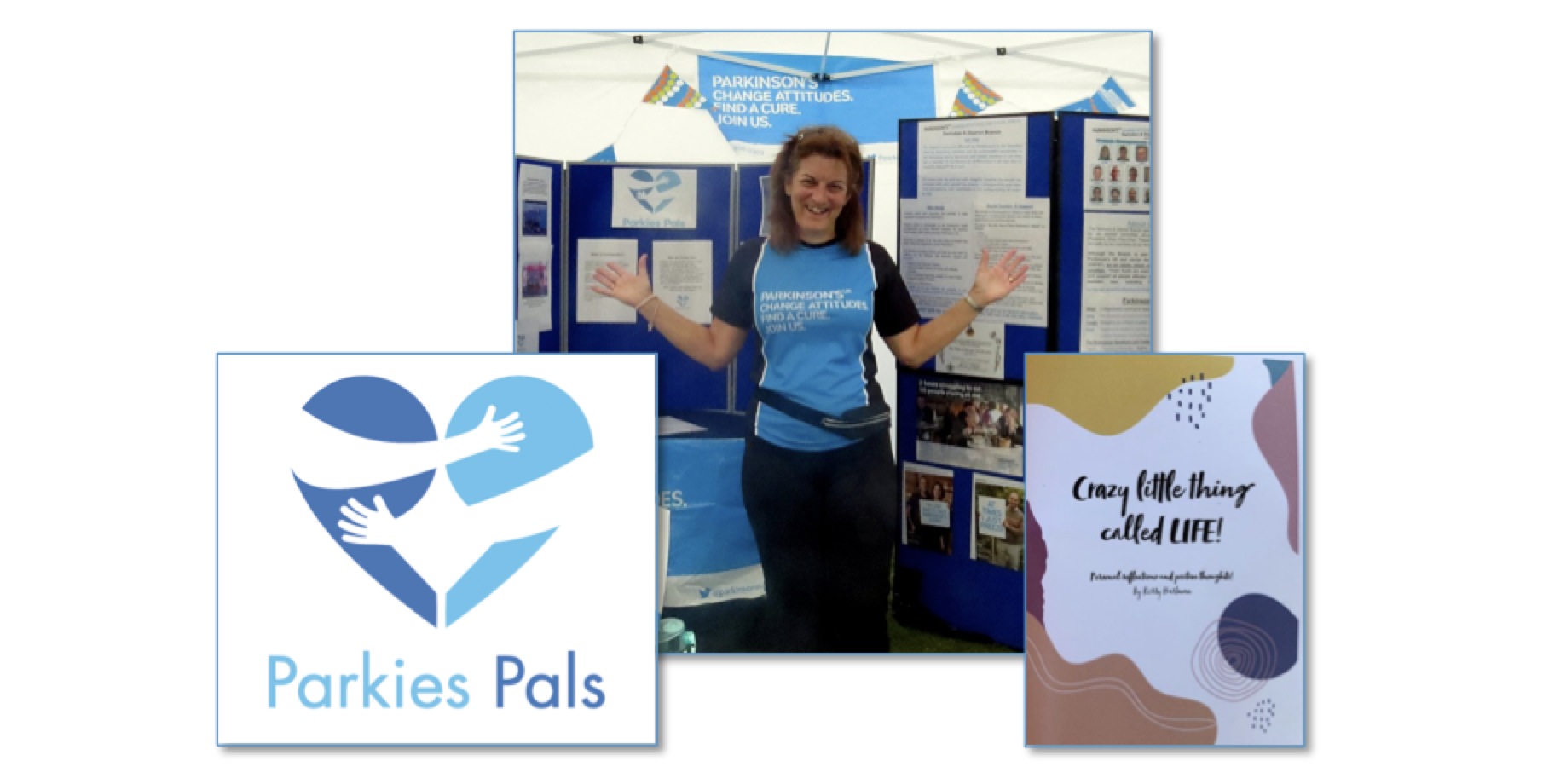
Kerry Hartman lives in Shrivenham near Swindon and attended the first ever Fighting Fit programme in November 2018. In this short article she talks about her Parkinson’s diagnosis, how it motivated her to form a local support group and resulted in the surprising outcome of becoming a poet!

Kerry says:

I have always kept generally fit and healthy, completing a power-walking marathon, two half marathons and several ‘race for life’ walks raising funds for Cancer charities. I am a keen cyclist and had no major health issues except some back pain occasionally. In 2013 I felt as if my righthand side was slipping down and my right hand starting clawing when I walked, I was concerned it may be a stroke! It started to affect my writing, speech and it was uncomfortable to sit for long periods which affected my work as a School Office Manager.

After seeing a specialist for rheumatism over 3 years and having brain and body scans with no satisfactory result I was eventually sent to a Neurologist. Following a DAT scan, which looks at dopamine levels specifically, I was diagnosed with Parkinson’s in April 2017, aged 56. This dispelled the myth that it is only an ‘old person’s’ disease! I knew little of this condition except for seeing Michael J Fox, Billy Connolly and Muhammed Ali, who have helped raise the profile to some extent, and the image of shaking and immobility. I  soon learnt that there are so many versions of Parkinson’s, effecting people of all ages and in different ways but the common advice is take the meds and keep moving! I am very fortunate to have an amazingly supportive family and an incredible circle of friends who help keep me motivated and mobile.

“I created Parkies Pals to unite people with and without this frustrating and debilitating condition, in support and friendship. We raise awareness through cafe meet-ups, fundraising and sponsored events. Money raised go to Parkinson’s UK and the local Swindon Parkinson’s branch, both of whom are very supportive of our activities. I want to spread the word beyond my lovely village of Shrivenham and see support groups like ours created in areas across the UK”.

“It’s strange, but Parkinson’s seems to have unlocked some poetic part of my brain. My family and friends encouraged me to produce a booklet of my poems to help raise funds”.

Here is a taster from a collection of Kerry’s poems:

             Crazy Little Thing called LIFE!

            For me poetry is an emotion

            It wells up right from my heart.

            For me poetry is part of life’s journey

            That Parkinson’s inspired me to start

            It may not be everyone’s way of expression.

            Some people paint, draw or sing.

            But if you’d like a copy of my crazy LIFE!

            Just send me an email or ring!

If you would like a copy then please contact Kerry at Parkiespals@outlook.com Any donations will go to the Swindon & District branch of Parkinson’s UK to help fund resources and activities to support the local community. If you’d like to know more check out the website at www.ParkiesPals.co.uk     ​

Coronavirus and treating Parkinson’s

Coronavirus and treating Parkinson’s

Some of the questions we are all asking as we start coming out of the COVID-19 lockdown include:

  1. How has the coronavirus crisis affected access to Parkinson’s treatment?
  2. How can people with Parkinson’s look after their mental wellbeing?
  3. Do you think the coronavirus crisis will have a long-term impact on people with Parkinson’s?

Four healthcare professionals share how services have adapted, and their advice for people with Parkinson’s resulting from the pandemic.

  • Emma Edwards: I’m a mental health nurse in the UK – however for the last 10 years I’ve worked as a Parkinson’s specialist nurse in the community.
  • Joaquim Ferreira: I am a neurologist mainly working in the field of Parkinson disease for the past 25 years. I am also professor of neurology and clinical pharmacology at the University of Lisbon, Portugal.
  • Miriam Parry: I work as senior Parkinson’s Disease nurse specialist (PDNS) at King’s College Hospital NHS, Parkinson’s Foundation Centre of Excellence in London, UK.
  • Rick Helmich: I live in Nijmegen, the Netherlands and work as a neurologist and neuroscientist at the Radboud University Medical Centre.

The most important thing for the community is strengthening support and continuing care, keeping the links between patients, their families, caregivers and health professionals.

Read the full interview from this article in Parkinson’s Life – here.