To Write Right?

To Write Right?

I used to be so proud of my handwriting in the days when all school work and reports were handwritten; before ‘copy’, ‘paste’ and computer script became the norm.

With the introduction and widespread use of technology most of us are probably guilty of sending emails and text messages rather then handwritten and posted letters and cards.

So, I can safely say my handwriting was deteriorating before I was diagnosed with Parkinson’s but it has most definitely become smaller and more illegible since. I was relieved to find this is very common with Parkinson’s and is called ‘Micrographia’. If this is you too then help is at hand.

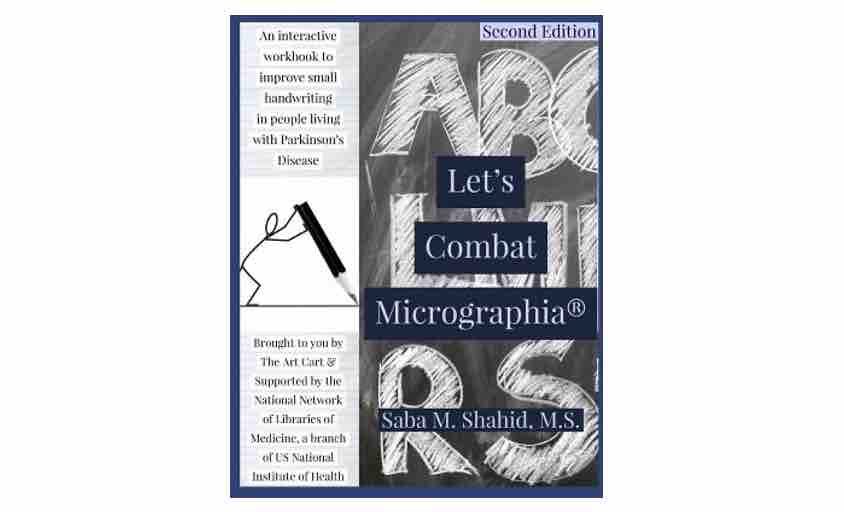
I have recently completed ‘Let’s Combat Micrographia’, a 7 week instructor-led, interactive workshop course which teaches you techniques on how to improve your handwriting along with some very useful hand, finger and wrist exercises to improve flexibility.

It is a American course which uses weekly zoom class for 1 hour and is led by an enthusiastic and incredibly cheerful American lady, Saba, who certainly lives up to her title of Chief Smiling Officer of Creative Neurology.

The aim of the programme is to encourage you to ‘macro’ rather than micro through a series of handwritten exercises such as tracing and copying (like back in the old school room!), journal keeping and storytelling. The secret is to relax, focus and practise, practise, practise.

The course if offered at no cost as long as you attend the weekly zoom class (these are friendly and not pressurised sessions) and useful resources are provided. Personally the format worked for me once I’d got used to the ‘awesome’ expressions and American style of approach and my hand writing has definitely improved.

There are more courses planned and so for further information contact Saba Shahid directly at saba@creativeneurology.com

Best wishes,

Kerry Hartman

Take care when renewing your driving license

Take care when renewing your driving license

When a person in the UK is diagnosed with Parkinson’s it is a legal requirement that the DVLA and your insurance company are informed of this.

The driving licence then will be reviewed every 1-3 years, with the DVLA contacting your Parkinson’s consultant/nurse asking them to complete a medical questionnaire. The patient does not normally see this report.

As my licence has been reviewed twice with no problem at all I was relaxed about it this time. I was then surprised to receive a serious sounding letter two days before Christmas from the DVLA telling me that my licence had been revoked and with immediate effect I was not permitted to drive a car.

I called the Parkinson’s Helpline, but they do not have any expertise in this area and suggested I contact the DVLA or the CAB. I tried to contact the DVLA but communicating with them was very difficult as they cannot reply to emails. When I finally managed to get through on the phone, I requested copies of all the relevant paperwork. Included with these was the consultant’s medical questionnaire from 2017 and the recent one. This is when I found the consultant had ticked the box saying my condition could affect safe driving. He qualified it by saying it was possibly due to my motor symptoms. What I found most disturbing was the fact that I hadn’t seen my consultant face to face since November 2019 and driving was never discussed!

This meant that a major decision about my life had been made by my consultant and the DVLA who had never seen me drive. There is no reliable public transport where we live so, without a licence, I would have to rely on my wife and friends to take me places or we would have to move. I do expect to give up driving at some point, but hopefully not yet!

I contacted my consultant who expressed great surprise at my licence being revoked and offered to help. We had a telephone consultation where he confirmed by letter that after tweaking my meds and diet, he considered I was fit to drive.

Phoning the DVLA again, I spoke to someone who was quite helpful in advising me how to appeal. This meant completing an entirely new licence application (form D1), a new Parkinson’s medical questionaire (form PK1) and enclosing new medical evidence (the report from my telephone consultation).

Everything was sent to the DVLA on 7th February, 2021. Two months later I am still waiting for their reply so I am keeping my  FINGERS CROSSED!

Cheers,

Ian Pegg

YOPD and finding good advice hard to find?

YOPD and finding good advice hard to find?

A series of podcasts have been specially recorded to assist younger people with Parkinson’s get access to advice from people living with the condition.

For those that have been on a Fighting Fit weekend you will recognise me as one of the co-founders and facilitators of FF. I also work with the Younger Parkinson’s Alliance (YPA) who have been busy during lockdown making this series of podcasts.

The YPA is a group affiliated to Parkinson’s UK who meet regularly to further the needs of pwp who have been diagnosed under 50yrs old, referred to as young onset Parkinson’s disease (YOPD), which brings a whole new set of additional challenges.

We try to answer the questions “How do I manage this situation and do it well over several decades. I have a life to lead, family to support, job to do…. and I’m under 50 with Parkinson’s…….help!”. YPA tries to give people in this position practical advice from experts and people who are living with the condition.

Coping with all the pressures of normal life (and Covid!) has been broken down into 6 key topics as follows:

  1. Diagnosis
  2. Medication
  3. Exercise
  4. Finances (Release shortly)
  5. Employment (Release May 2021)
  6. Relationships (Release July 2021)

For each topic there is a 45 – 60 minute podcast with 3 panelists who each have YOPD. They share their real-life experiences, tips, things to avoid and “must dos”. We have also involved experienced, subject-matter experts. The podcasts are both light hearted with practical discussions between pwp from different backgrounds and different parts of the country.

Each episode is self contained and you can listen to them in any order. You may want to listen regardless of your age – the information is useful to all pwp.

The YPA website address where all the released Podcasts can be found is as follows: www.youngerparkinsonsalliance.org

Happy listening!

Pat Salter

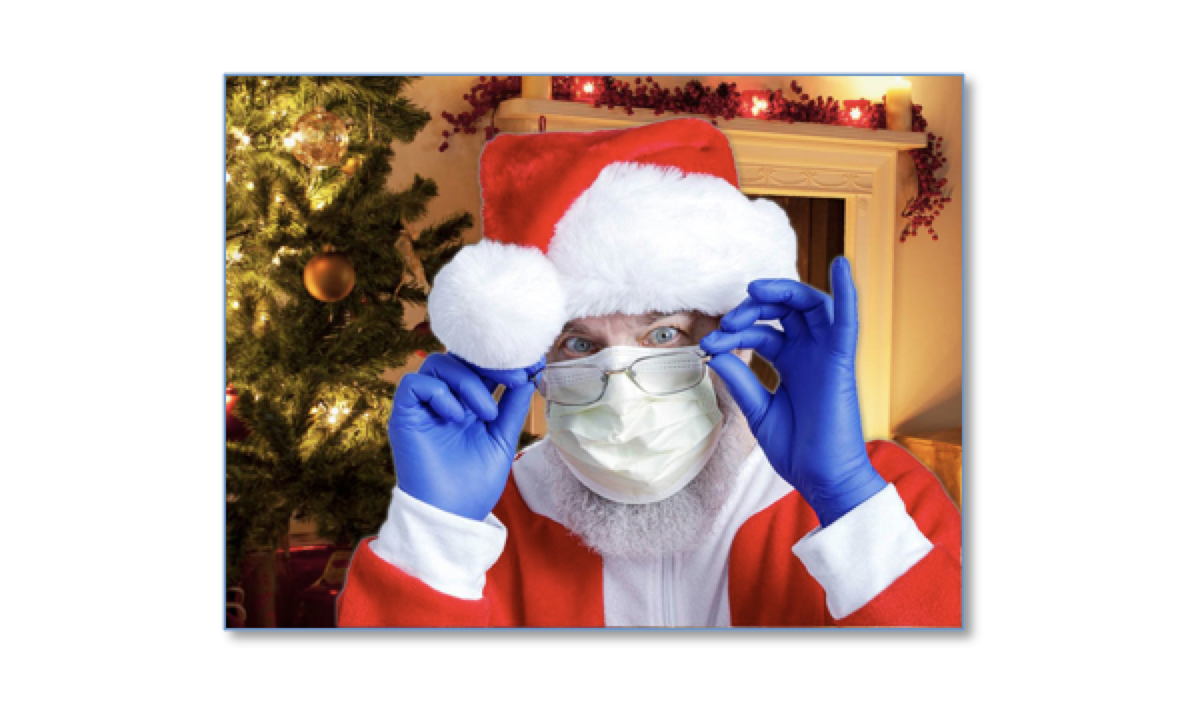
Covid Christmas 2020 by Kerry Hartman

Covid Christmas 2020 by Kerry Hartman

‘Ho Ho’ Hoping to inject some festive fun

As we come to the end of a difficult year.

Sifting through the cards and wrapping paper

Looking for the gift of Christmas cheer!


It feels like COVID Grinch is threatening our Christmas,

That Scrooge’s humbugs are all we can see.

Festive songs that can’t be sung in public

Socially distanced gatherings under the tree!


Tis said it’s the season to be jolly

To celebrate with family, friends and cheers.

But this Christmas may be somewhat restricted

With pandemic rules and lock down tiers.


As we reflect on 2020,

it’s been tough one for us all.

Living in isolated ‘bubbles’,

Missing special hugs and so much more.


Some of us have battled terrible illness,

Some winning, some losing that fight.

We may not all be able to physically share the pain

But we can all sympathise with their plight.


We all know there’s no pandemic quick fix,

Scientists are working worldwide on a cure.

NHS staff work tirelessly to protect us.

A vaccine would be the best gift for sure.


I always try to keep a positive head on.

I have struggled this year it is true.

But I’m ever grateful for my friends and family,

And hope I can share positive vibes with you.


One thing this year has proved to many

Is that you don’t have to be alone.

People have become very inventive

With social media opening up all our homes.


Christmas will happen despite COVID rules,

We must try and see the Star lighting the way.

So make sure you contact your loved ones

Even sending virtual hugs with Santa’s sleigh.


So let’s deck the halls with plenty of holly,

‘Crack’ cracker jokes and turn the music on!

Wear Christmas jumpers and crazy earrings,

And seriously have a merry Christmas everyone.


Kerry Hartman

Exercise as medicine …. by Keith Black

Exercise as medicine …. by Keith Black

The human body is an amazing machine. In many ways it has the capacity to self heal.  Provide it with good food, water, fresh air, sunshine, sleep and exercise and it will protect you from many ailments – despite having Parkinson’s.

The Challenge:

“Appropriate exercise” is regular, varied, high-intensity, and challenging.

The current theory is that you can exercise for 10 minutes, two or three times a  day (see reference 5, 11 minutes in, “the more days per week PwP reported exercising, the fewer their PD symptoms over time”).

I try to do this every day.  I need to vary the type of exercise I do otherwise I get bored and lose interest: different types, of different duration, with or without weights. It is possible to get expert guidance, to keep it interesting, varied and within your capability. As you get stronger you can challenge yourself to try more intense exercises, or for example, add a heavier dumbell while you exercise.

The Solution: make it part of your daily routine

Val and I figured we had to commit to doing our exercises together, at the same times every day. Before breakfast we have a 10 to 20-minute workout. Then before morning coffee we enjoy another 10-15 minute session, and finally, before our evening routine, we have a third 10-20 minute walk (unless it’s raining) or weights session.

We have found some expert trainers/coaches on YouTube, free of charge, here are some we use:

  1. Zach Bush (4 min): before breakfast or any time during the day
  2. Lucy Wyndham-Read (7 min series): before breakfast or coffee
  3. Bowflex workout: before coffee or evening routine
  4. Rebecca Louise: anytime

(Val adds: don’t be put off by the fact that Lucy is aimed at helping women. She is the most liked personal trainer on YouTube and the reason is that her instructions are safe and clear, she always shows an easier option, all her sessions involve mind and body, and are designed to use multiple muscles.)

Try one of her 7-minute sessions, later work towards her 20-minute videos. If you try the Bowflex 5-6 minute YouTubes, vary your weights (we bought ourselves a few sets of dumbells). And do it to your ability, make it fun. and you’ll look forward to each session.

Val: it is so beneficial for me as well, our exercise sessions together mean that we encourage each other not to ever miss, as we both feel the benefits so much.

(Keith: and Val is so competitive makes me do an extra pushup)

YouTube may surprise you with a suggestion of its own. Today Val had me doing the Jeruselema 🙂 This is a South African song and dance that has taken ‘the world’ by storm. The song is so catchy, and there are numerous YouTube videos to teach you how to do the dance steps.

I hope this encourages you to include exercise in your daily regime, and please share any videos you find. The references mentioned above can be found as follows:

  1. https://youtu.be/PwJCJToQmps
  2. https://youtu.be/S8xkwLlzIA8
  3. https://youtu.be/06jTL5KxrqY
  4. https://youtu.be/QbHdsco6uto
  5. https://fighting-fit.org.uk/dr-laurie-mischley-does-nutrition-play-a-role-in-pd-symptoms-or-progression/

Also, here’s an excellent link from the Parkinson’s Foundation: https://www.parkinson.org/Living-with-Parkinsons/Resources-and-Support/PD-Health-at-Home/Fitness-Fridays

Stay well!

Keith Black
Christine Walden – Living my best life with Parkinson’s

Christine Walden – Living my best life with Parkinson’s

I have been on my Parkinson’s journey since 2016 when I was finally diagnosed on my birthday – not much of a gift!

Life at that time was somewhat tricky I had just had a hip replacement after breaking my leg in France on a skiing holiday two years before. My mobility had taken a definite downturn and family life was challenging as my husband had been diagnosed with dementia and passed away in 2019.

My Parkinson’s nurse referred me to a Stable course – introducing how important exercise is in managing Parkinson’s.  During this course I met Symon Vegro who told me about Fighting Fit, and I attended a weekend in Aylesbury in November 2019 which was a great experience. There were taster sessions of exercise, dancing, singing and lots of informative sessions on subjects such as nutrition, medication, sleep etc. It was so interesting and the best part was meeting others who understood so well what life with Parkinson’s is about and to share experiences.

As part of my personal Parkinson‘s journey I travelled to Italy in September with my daughter Polly to the European Parkinson therapy centre for a week. This comprised individual therapy every day, intensive exercise sessions in the morning and then group sessions late afternoon on subjects such as cognitive therapy, stress, diets and medication. The centre’s treatment focussed on four pillars – medical, physical, lifestyle and psychological therapies.  It was an amazing trip and I’m so grateful I was able to go. Everyone was so friendly and encouraging and the takeaway message was that exercise is medicine and is as important as our drugs and will help us to take control of our Parkinson’s.

I would thoroughly recommend this trip to a beautiful part of Italy, and even though it is hard work, it’s also a holiday!

I’ve been asked to say what my top 3 tips for living well with Parkinson’s are so here we go:

  • Exercise is so important and really makes a difference to your physical and mental health
  • Be positive in your outlook on life, look outwards to see the beauty of our world
  • Join a group and talk to others and why not come on a Fighting Fit weekend in 2021.

Hopefully we’ll be up and running again by then.  You will be assured of a warm welcome and make some new friends.


Christine Walden