
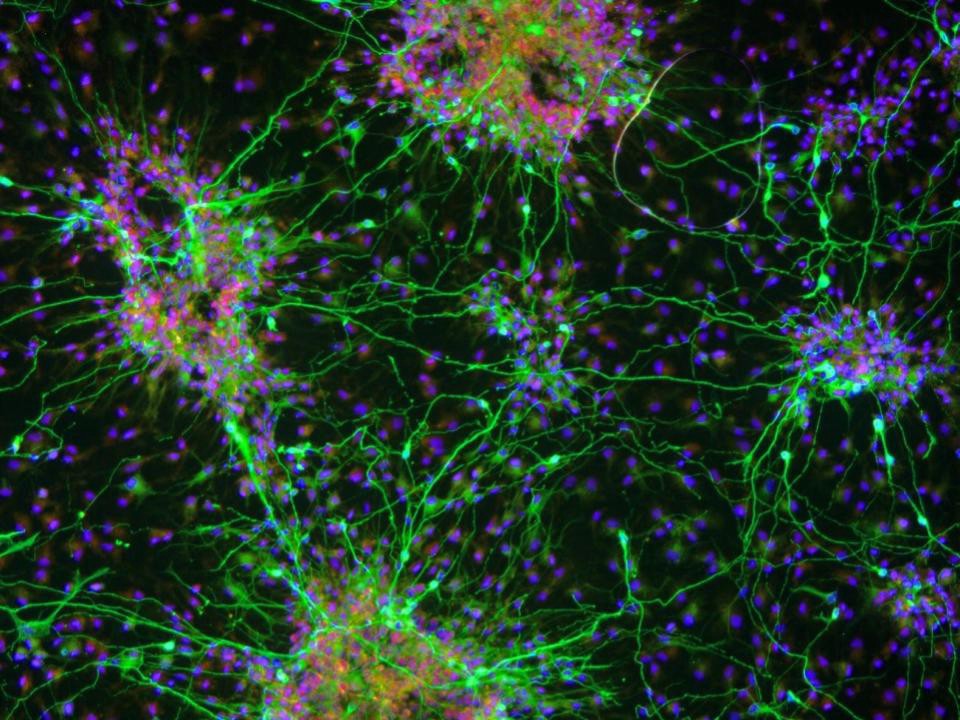
New one-step process converts cells inside the brain into dopamine-producing cells to replace those lost in Parkinson’s.
Great work by Claire Bale bringing you a clear and comprehensible explanation of what all the fuss is about (creating new dopamine neurons in the living brain).
Read all about here!
Groundbreaking research has developed a new technique that makes it possible to convert neighbouring brain cells into new dopamine-producing cells.
The research was conducted in mice and is published in the leading scientific journal Nature.
There are still many challenges to overcome before this technique can be tried in people with Parkinson’s but it opens the door to the development of an exciting new treatment approach.
Associate Director of Research at Parkinson’s UK, Professor David Dexter, comments
“Cell transplants have, for a long time, aimed to replace lost cells in Parkinson’s but their effectiveness has been limited since they struggle to integrate and function effectively within the brain.
“This new technique has overcome this major hurdle in mice and opens the door to an exciting new treatment approach, which may be able to reverse Parkinson’s in people in future.
“While people affected by Parkinson’s should be greatly encouraged by the rapid advances researchers are making, such new technology requires extensive additional research and safety testing before it can be trialled in humans.”